
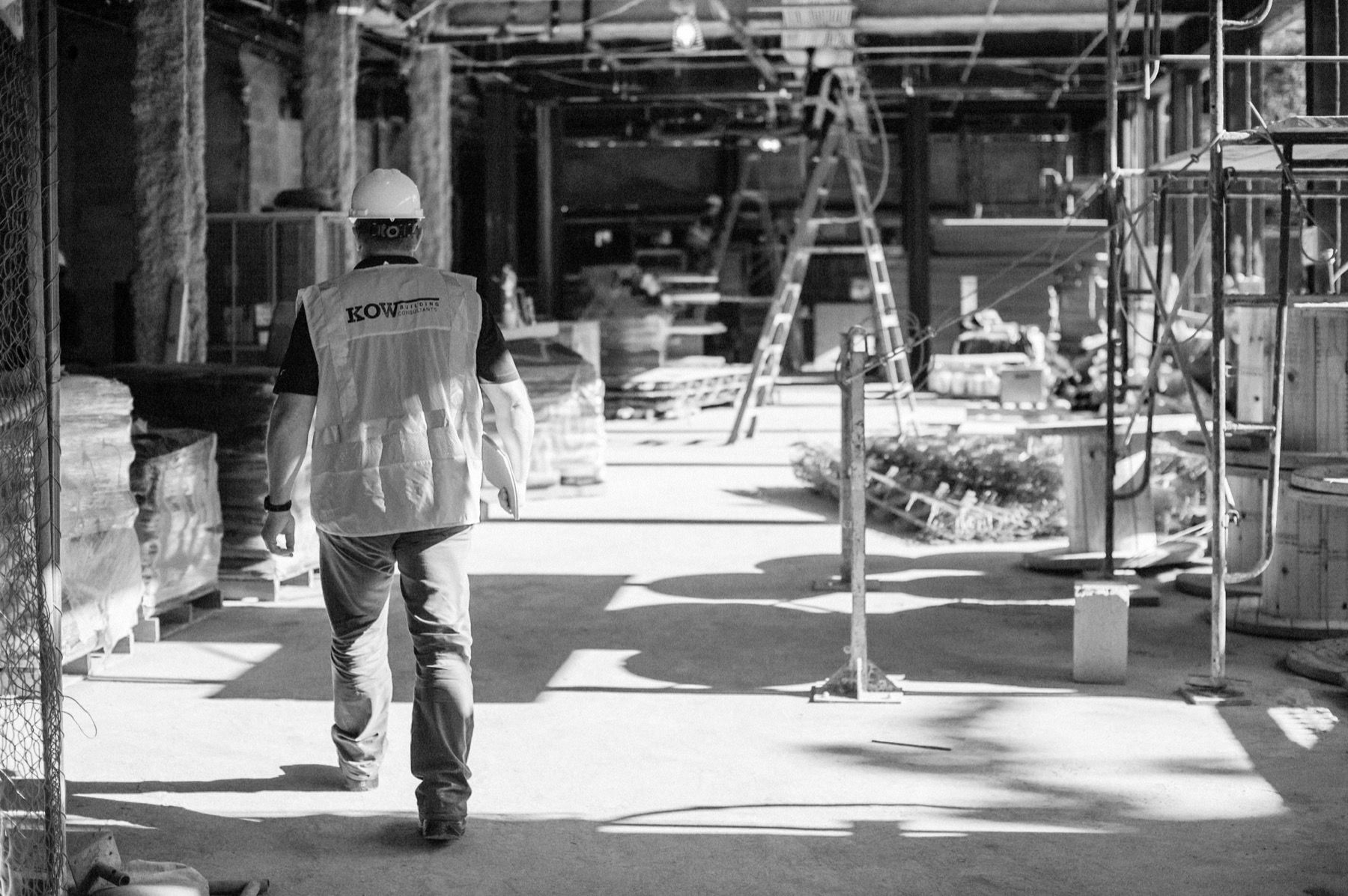
A construction-warranty response should preserve the governing record, symptom and notice chronology, temporary protection, competing causes, investigation, corrective work, retesting, cost, and accepted disposition.
Define the claim without deciding it in advance
Identify the project, affected building and area, reported condition, first known occurrence, consequence, current operating state, responsible owner representative, design and contract teams, contractors and subcontractors, manufacturers and suppliers, commissioning parties, insurers, lenders or equity partners, and the decision required now. Separate an emergency response, service call, punch-list item, commissioning deficiency, contract correction, manufacturer claim, insurance claim, latent-condition concern, maintenance issue, and a formal legal dispute. Several may exist at once, but they do not automatically share the same notice, evidence, responsibility, or remedy path.
Collect the executed agreements, general and supplementary conditions, scopes, drawings and specifications, approved submittals, changes, accepted substitutions, permits, testing and commissioning requirements, certificates, acceptance and occupancy records, warranties, guarantees, maintenance obligations, exclusions, notice addresses and methods, limitation periods, dispute procedures, and governing correspondence. Contract interpretation, preservation of rights, legal notice, privilege, liability, and remedy belong to the owner, contract administrator, insurer, and counsel as applicable. KOW can help organize and assess technical evidence within its engagement; it should not turn an early field observation into a legal conclusion.
Build one symptom, event, and notice chronology
Record who observed the condition, date and time, exact location and asset, building use, occupancy, weather, loads, operating mode, controls and alarms, utilities, maintenance, cleaning, tenant or resident activity, recent construction, shutdowns, prior similar events, and damage. Preserve photographs and video with orientation and scale, trend and alarm exports, meter and sensor data, service tickets, work orders, complaints, test reports, deliveries, installer and operator accounts, samples, removed components, and the source and timestamp for each item. Distinguish contemporaneous evidence from later recollection and retain original files before they are annotated or compressed.
Create a notice log showing discovery, initial protective notice, formal contract or warranty notice, recipient and required delivery method, acknowledgement, site visit, request for information, proposed response, reservation or denial, investigation, corrective proposal, access, schedule, cost position, follow-up, and open deadline. FAR 52.246-21 provides one federal fixed-price construction example in which written notice follows discovery and the clause defines a specific warranty and remedy structure. It does not establish the private project’s rights or a universal one-year period. Use the actual governing documents and legal advice rather than substituting a familiar industry form or federal clause.
Protect people and property without erasing the condition
Take immediate action proportionate to the consequence: isolate unsafe equipment, control water, protect occupants and contents, provide temporary heat, cooling, power, water or weather protection, establish monitoring, secure the area, notify emergency and authority contacts, preserve access, and document the as-found condition. Identify who authorized the work, why delay was not acceptable, what was moved or removed, which conditions could no longer be observed, and the limits of temporary protection. Emergency response should not wait for a claim strategy where safety, health, property, or continuity requires action.
Before destructive work, coordinate the owner, contractor, design professional, manufacturer, insurer, counsel, testing laboratory, commissioning provider, and other responsible parties as the circumstances warrant. Photograph and identify removed layers and components; maintain chain of custody for samples or failed parts when relevant; record dimensions, fasteners, sealants, interfaces, settings, contamination, moisture, corrosion, fracture or wear; and preserve representative material if it can be done safely and lawfully. Define whether a joint observation is needed and how access or notice will be managed. If evidence must be disturbed, record the reason and sequence rather than pretending the original condition remained available.
Investigate the assembled system and competing causes
Frame the technical question around the accepted design and installed work. Trace the affected assembly or system through structure, enclosure, roofing, waterproofing, drainage, plumbing, mechanical, electrical, controls, fire and life safety, finishes, site conditions, adjacent work, maintenance and operation. Compare contract documents, submittals, approved changes, record information, installation sequence, inspections, testing, commissioning, service history, and the current field condition. A component can fail because of manufacture, installation, design, coordination, damage, operation, maintenance, environment, another trade, an altered condition, or several interacting mechanisms.
Write competing hypotheses before selecting tests. State the mechanism, evidence that supports and contradicts it, condition needed to reproduce it, and what the proposed probe, test, calculation, monitoring period, laboratory work, or specialist review can establish. Keep facts, professional opinions, contractor or manufacturer positions, and unresolved alternatives separate. ASTM E2128 offers a recognized process for wall-leakage evaluation and warns against overstating whether every unique source has been found; the same discipline applies broadly even when another system and test method govern. Do not present destructive testing, one failed part, one trend, or one dry observation as universal proof beyond its coverage.
Control the corrective proposal, work, and retesting
Require a response that identifies the alleged condition, proposed scope and basis, areas and quantities, drawings or calculations, materials, manufacturers, installer qualifications, permits, temporary protection, access, hazardous materials, sequencing, outage and occupied-space controls, affected adjacent work, testing, restoration, schedule, cost, responsibility position, warranties, and criteria for acceptance. Distinguish investigation, temporary repair, permanent correction, elective betterment, owner maintenance, unrelated capital work, and disputed scope. An urgent patch may be necessary without becoming the accepted permanent solution or an admission by any party.
Establish hold points and evidence for removal, exposed substrate, concealed correction, installation, startup, cleaning or flushing, calibration, balancing, functional or performance testing, water or air testing, weather observation, restoration, and return to service. Record deficiencies, corrective work, retest, and final disposition by location and asset. A symptom that disappears immediately after work may not prove durable correction; define the operating, load, seasonal, rainfall, pressure, temperature, occupancy, or monitoring conditions needed for reasonable verification and identify any test deferred until those conditions occur.
Close the claim, cost record, and remaining ownership risk
Prepare an accepted disposition that identifies the governing issue number, original condition, notice history, investigation and limits, established and unresolved causes, temporary work, final correction, affected locations, tests and results, restoration, completion date, cost and payment treatment, contractor or manufacturer response, insurer status, retained or released funds where applicable, warranty effect on repaired and adjacent work, maintenance required, and any continuing monitoring. Do not close the technical record merely because an invoice was credited or a contractor left the site; do not imply a legal release unless the authorized parties have made one.
Update drawings, submittals, sequences, setpoints, equipment and finish records, commissioning and issue logs, warranties, maintenance procedures, training, spare parts, inspection schedules, building history, and the capital plan. UFGS 01 78 00 provides a federal-project example of a warranty-management plan, contacts, warranted-equipment lists, status tracking, and scheduled warranty inspections; private projects must establish their own contract process. Report material open claims to lenders and equity partners when they affect completion, collateral, operations, reserves, retainage, final funding, guarantees, insurance, cost to complete, or the business plan, while preserving the consultant’s technical boundary and the authorized party’s decision.
Primary sources
Sources and technical references.
Source review current as of September 2, 2026.
- Federal Acquisition Regulation 52.246-21 — Warranty of Construction
- Federal Acquisition Regulation 46.7 — Warranties
- UFGS 01 78 00 — Closeout Submittals and Warranty Management
- ASTM International — E2128 Standard Guide for Evaluating Water Leakage of Building Walls
- U.S. Department of Energy FEMP — Commissioning Process for Federal Facilities